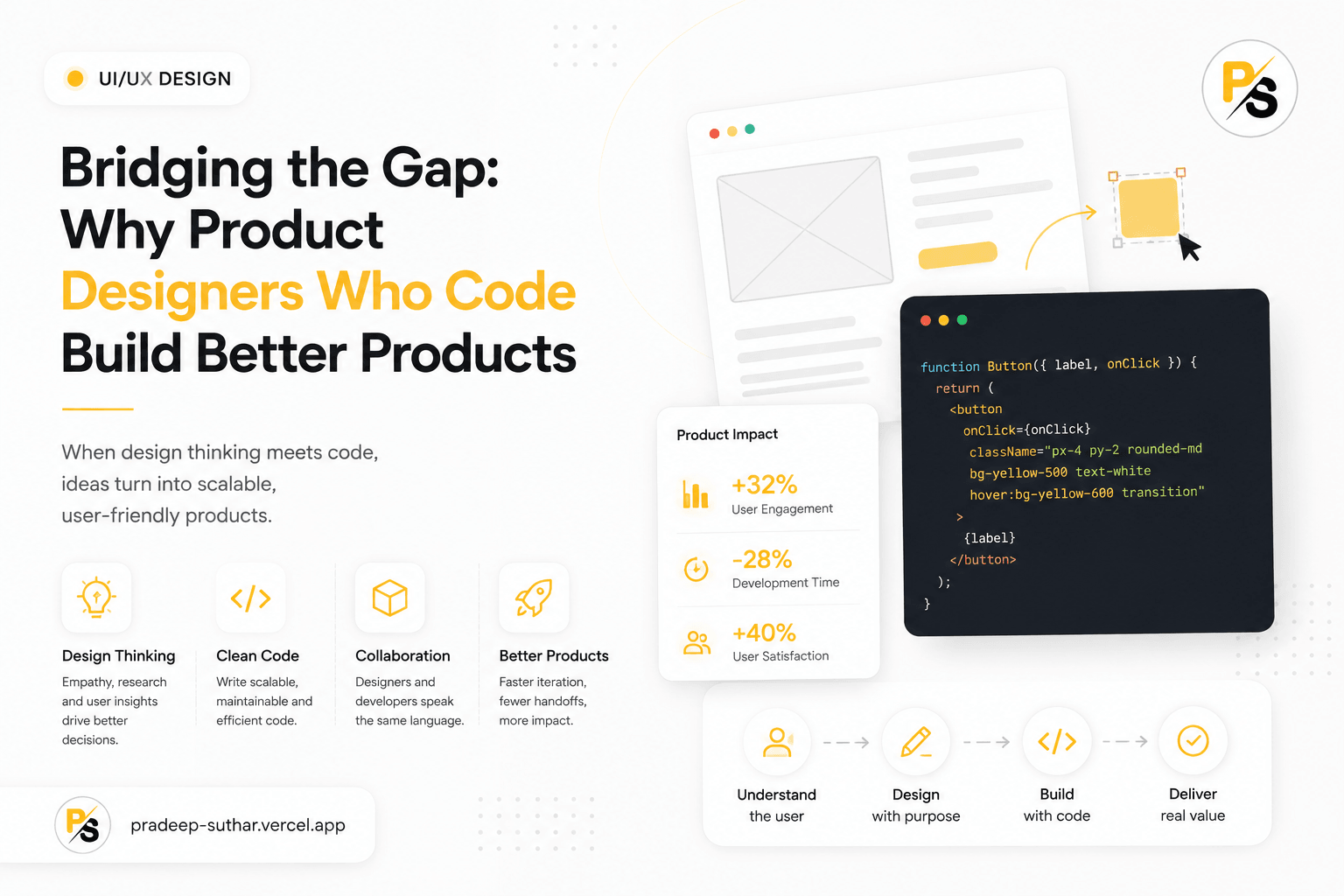
The traditional handoff between the design team and the development team is one of the biggest bottlenecks in modern software engineering. Design specs are often misunderstood, animations get skipped, and responsive layouts break. This is why the industry is rapidly shifting toward hiring design engineers—product designers who code their own frontends.
The Advantages of hiring a UI/UX Developer
A hybrid UI/UX developer understands both design principles (contrast, alignment, typography, micro-animations) and frontend architecture (React, Next.js, state management, API routes). Here is how they streamline your build process:
- Pixel-Perfect Accuracy: Since the designer writes the CSS/JS, there is zero loss of visual quality from layout mocks to production.
- Rapid Prototyping: Instead of building flat mockups, hybrid developers create high-fidelity, interactive code prototypes.
- Cleaner Codebases: They manage design tokens (colors, margins, typography) as reusable code utilities, avoiding style inflation.
1. Integrating Design Tokens in Tailwind CSS
A hybrid designer ensures that the design system translates directly into code. By using CSS variables inside Tailwind CSS configs, changes to the theme update globally across both styles and code components instantly.
// tailwind.config.js snippet
module.exports = {
  theme: {
    extend: {
      colors: {
        primary: "rgb(var(--color-primary) / <alpha-value>)",
        surface: "rgb(var(--color-surface) / <alpha-value>)"
      }
    }
  }
};
2. Performance & SEO Engineering
A designer who codes is also highly conscious of performance. By choosing Next.js for static regeneration (SSG) and structuring semantic HTML5 layouts, they ensure your web application scores 100/100 on Google PageSpeed Insights and ranks at the top of organic search results.